Understanding the Eight Wastes in Lean: A Comprehensive Guide
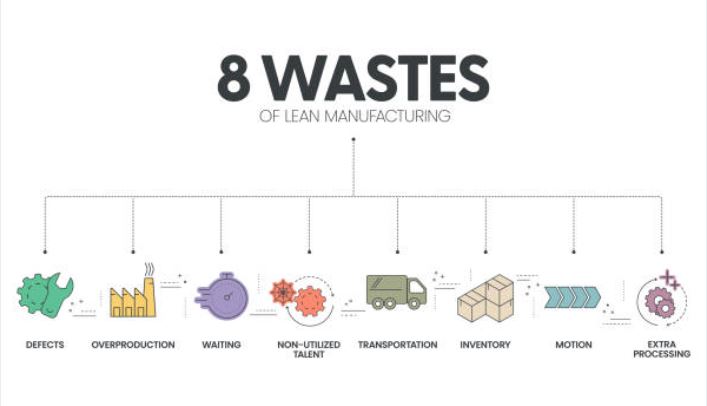
In Lean methodology, waste, known as “muda” in Japanese, is anything that does not add value from the customer’s perspective. Originally, Lean identified seven types of waste, but an eighth waste has been added to highlight the underutilization of people’s skills and talents. Understanding and eliminating these eight wastes is crucial for improving efficiency and effectiveness in any organization.
The Eight Types of Waste
The eight types of waste can be remembered with the acronym TIMWOODS:
- Transportation: Unnecessary movement of products or materials between processes. This can lead to longer lead times and increased costs without adding value.
- Example: Moving parts between different areas of a factory without any processing or value addition.
- Inventory: Excess products or materials not being processed. This ties up capital and space, potentially leading to obsolescence or damage.
- Example: Overstocked raw materials that remain unused for long periods.
- Motion: Unnecessary movement by people, such as walking or reaching, which doesn’t add value to the product or service.
- Example: Workers walking long distances to retrieve tools or parts.
- Waiting: Idle time when resources (people, equipment, materials) are not in use, which leads to inefficiency.
- Example: Workers waiting for the next processing step or for materials to arrive.
- Overproduction: Producing more than is needed or producing it before it is needed. This can lead to excess inventory and increased costs.
- Example: Manufacturing products in anticipation of demand that may not materialize.
- Overprocessing: Performing more work or using more parts than necessary to meet customer requirements. This often results from poor design or unnecessary quality standards.
- Example: Using overly complex machinery or processes for simple tasks.
- Defects: Efforts caused by rework, scrap, and incorrect information. This can lead to increased costs and reduced customer satisfaction.
- Example: Products that fail quality inspections and require rework or disposal.
- Skills (Underutilized Talent): Not using people’s skills, knowledge, and abilities to their fullest potential. This waste is often overlooked but is crucial for fostering innovation and continuous improvement.
- Example: Employees performing menial tasks instead of contributing ideas for process improvements.
Identifying Waste in Your Processes
To effectively identify and eliminate these wastes, a value stream mapping (VSM) exercise is essential. This involves creating a detailed flowchart of each step in your process to visualize the flow of materials and information. Here’s a step-by-step guide:
- Select the Process: Choose a specific process or product line to map.
- Map the Current State: Document every step, noting the time taken, resources used, and any delays or bottlenecks.
- Identify Waste: Look for the eight types of waste in the current state map.
- Design the Future State: Develop a plan to eliminate waste and improve flow.
- Implement Changes: Apply the changes and monitor the results to ensure waste is reduced.
Practical Steps to Eliminate Waste
- Standardize Work: Create standard operating procedures to ensure consistency and reduce variation.
- 5S Methodology: Implement the 5S (Sort, Set in order, Shine, Standardize, Sustain) to organize the workplace and improve efficiency.
- Continuous Flow: Strive for a continuous flow of work by minimizing delays and work-in-progress.
- Pull System: Implement a pull system, such as Kanban, to produce based on actual demand rather than forecasts.
- Root Cause Analysis: Use tools like the 5 Whys or Fishbone Diagram to identify and address the root causes of defects and other issues.
- Employee Engagement: Encourage and empower employees to identify and suggest improvements, ensuring their skills and talents are fully utilized.
Real-World Applications
- Manufacturing: Toyota, the pioneer of Lean, has extensively used these principles to become a leader in efficiency and quality.
- Healthcare: Hospitals use Lean to reduce patient wait times, streamline operations, and improve care quality.
- Service Industries: Banks and insurance companies apply Lean to simplify processes, reduce errors, and enhance customer satisfaction.
Conclusion
Eliminating waste is a continuous journey. By understanding and addressing the eight types of waste, organizations can improve efficiency, reduce costs, and enhance customer value. Lean tools and methodologies provide a structured approach to identifying and eliminating waste, fostering a culture of continuous improvement.
Implementing Lean principles may require a shift in thinking and a commitment to ongoing learning and adaptation, but the rewards—greater efficiency, higher quality, and improved customer satisfaction—are well worth the effort. Start small, stay committed, and watch your organization transform.
This guide serves as a foundation for understanding and tackling waste in your processes. Remember, the essence of Lean is about creating more value with less work, and by systematically eliminating waste, you can achieve significant improvements in performance and customer satisfaction.
What steps will you take today to start identifying and eliminating waste in your organization?